AI stopped answering questions this week. It started taking actions.
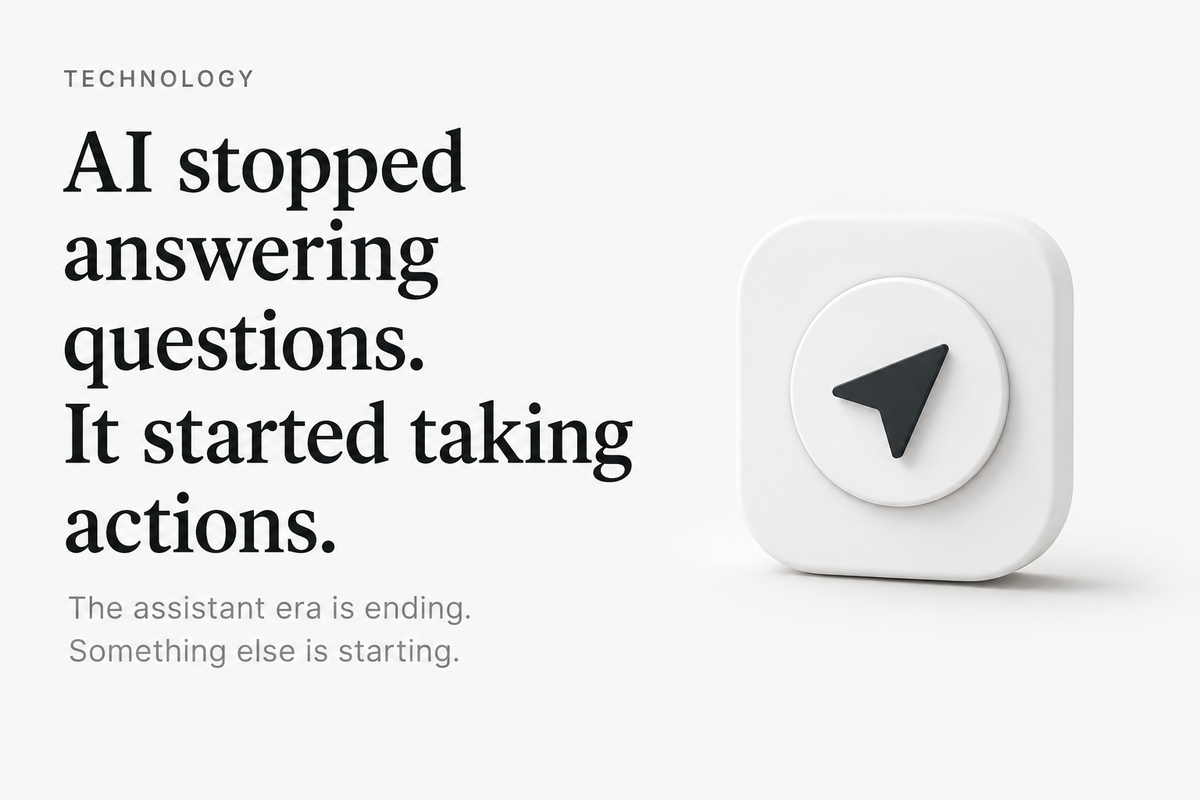
For three years, AI did one thing.
You asked. It answered.
That was the entire product. A smarter search bar. A faster writer. A patient tutor.
This week, that ended.
The shift
Two major platforms quietly shipped a new kind of AI in the last 48 hours.
It does not answer your question. It completes your task.
You say: plan dinner for six on Saturday.
It reads your inbox to find the guest list. Builds the menu. Adds the ingredients to a shopping cart. Books the table for the people who are joining late. Comes back to you only at checkout, for approval.
The conversation is the same. The product is not.
Why this is different
A chatbot is a mirror. You ask, it reflects back.
An agent is a hand. You point, it moves.
The first one cannot really hurt you. The second one can buy the wrong thing, email the wrong person, book the wrong flight, and spend money you did not plan to spend, all in the time it takes to look away from your phone.
The companies know this. That is why every demo this week includes the same line: the human stays in the loop.
For now.
The product the industry actually wants to build
The "human in the loop" line is a transition phase. It exists because the legal teams insisted on it.
The product roadmap underneath is different.
The roadmap is: AI that books the trip without asking. AI that answers your emails in your voice. AI that decides what arrives at your door each week before you have decided you wanted it.
Whether you call that convenience or a loss of agency depends on which side of forty you are.
What to watch
Whether anyone reads the permission screens. They will not.
Whether the first major "my AI bought something insane" story goes viral. It will, and soon.
Whether the regulators understand what just shipped. They do not.
The bottom line
For three years, the question was: what can AI tell me?
This week, the question quietly became: what should AI do for me?
The second question is the entire business model.
The first one was just the demo.